
Kia · Stinger · CK (2018+)
Korea's rear-drive answer to the German GT
Whiteline
Whiteline Front Swaybar


xForce
Stinger Primary Downpipes

xForce
VAREX Smartbox Bluetooth Exhaust Controller


EBC Brakes
EBC D Series Rotors

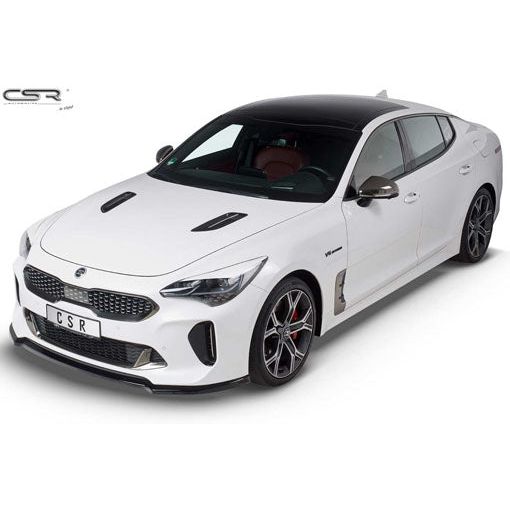
CSR Automotive
Kia Stinger Eye Lids
FAQ
Common questions
What's the best first mod for a Stinger GT 3.3T?
A tune. The stock 3.3 twin-turbo leaves a fair bit on the table, and a Stage 1 ECU/TCU calibration on 98 RON typically lifts it into the 300kW+ range at the crank with no hardware changes. It also sharpens the 8-speed's shift logic, which is the single biggest improvement most owners notice.
What realistic power can I make, and what hardware do I need?
Stage 1 (tune only, 98 RON) is the easy win. To go further, an upgraded intake, downpipes/cat-back and a proper intercooler/charge-pipe setup support Stage 2; the stock turbos are good for solid gains but are the main ceiling before you're into a turbo upgrade. Be realistic - the 3.3T isn't a 2JZ, so plan around the stock internals and fuelling.
Does the 2.0T 200S/GT-Line respond to tuning the same way?
It responds, just not as dramatically. The 2.0 turbo (182kW/353Nm in AU) picks up worthwhile mid-range from a tune and bolt-ons, but the aftermarket and headroom are far smaller than the 3.3T. If you bought it for outright power, the V6 is the car to modify.
Any known weak points to plan around?
The 8-speed auto and stock clutch packs don't love big torque, so TCU tuning and sensible torque limits matter as you add power. The 3.3's GDI carbon build-up on the intake valves is worth keeping an eye on, and many owners fit an oil catch can. Brakes and tyres are the next honest upgrade once you've added meaningful power - it's a heavy GT, not a lightweight.
Can't find what you need for your CK (2018+)? Get in touch — we're happy to help.